FOR FAMILIES
Home and school should be pulling in the same direction.
Parents remain the primary influence in their children’s lives. Heuristica comes alongside them — teaching, mentoring, encouraging, correcting and challenging, while working toward the same good.
You shouldn’t have to parent against your child’s school.

PARTNERSHIP
Parents and teachers should be on the same side.
SAME SIDE
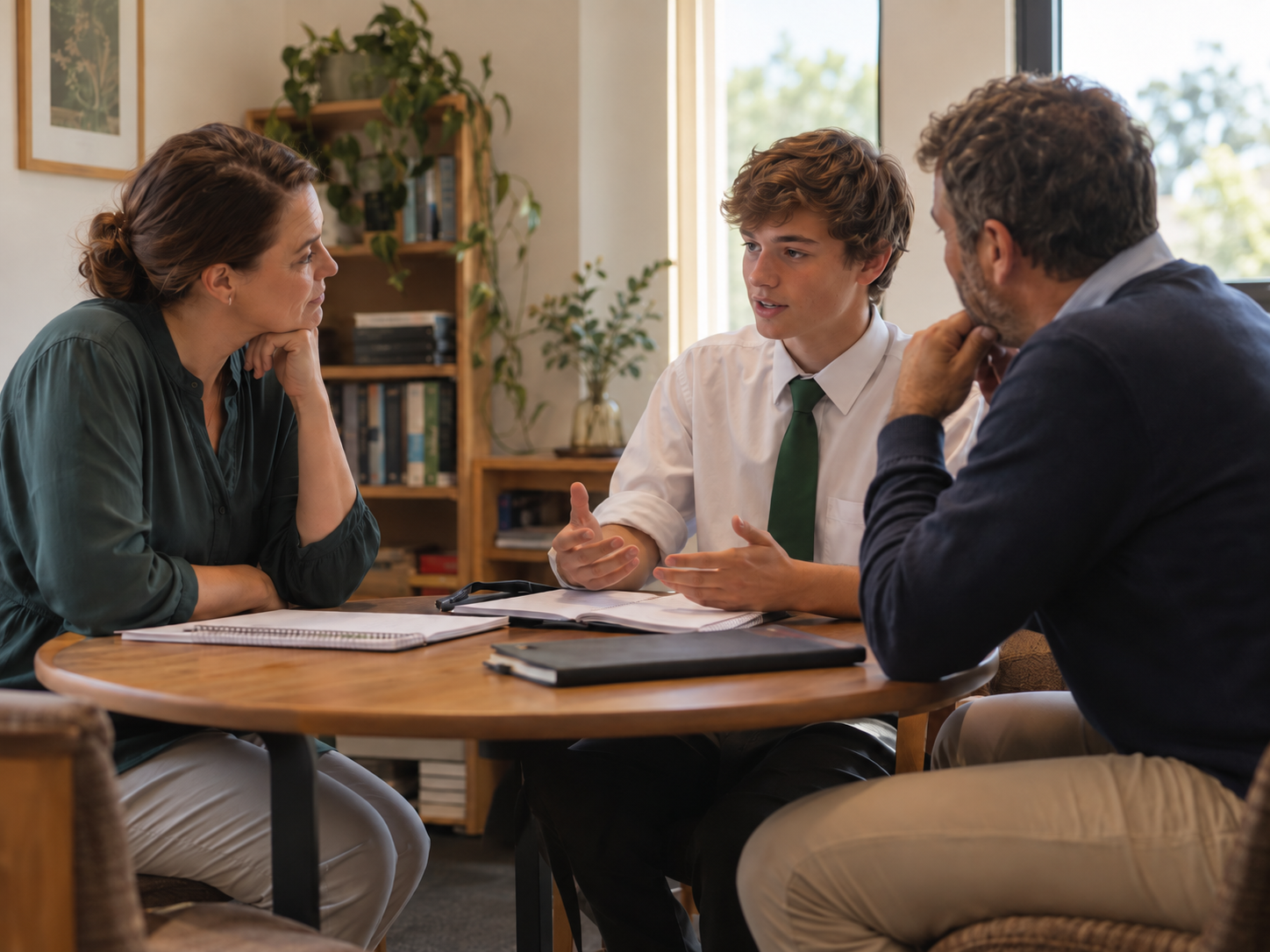
When a student is doing well, we celebrate together. When they are struggling, we sit on the same side of the table and ask the same question: what will help this young person grow?
GOOD COMMUNICATION
Good partnership requires honest, respectful communication. We want parents to ask questions, raise concerns and understand the reasons behind important decisions.
SHARED PURPOSE
School and home may not agree on every detail, but both should be working toward the same objective: helping the student become capable, responsible and mature.
PULLING IN THE SAME DIRECTION
We do not need to agree on everything. But we can work together.
The relationship works best when parents and teachers can disagree without becoming opponents.
TRUST
RESPECT
RESPONSIBILITY
PARTNERSHIP
WORKING TOGETHER
Questions do not put us on opposite sides.
Parents are welcome to ask why, challenge a decision or raise a concern respectfully. Healthy partnership does not require silence. It requires the willingness to speak directly, listen carefully and keep the student’s long-term good at the centre of the conversation.
Same side. Same student. Same goal.
HIGH EXPECTATIONS. HIGH SUPPORT.
Young people need both.
Students make mistakes. They need adults who care enough to support them, but also enough to expect something of them. Heuristica aims to provide both: genuine encouragement and clear boundaries, patience and accountability, grace and responsibility.
HIGH SUPPORT
Know the student. Listen. Encourage. Help them recover from mistakes and keep moving forward.
HIGH EXPECTATIONS
Teach boundaries clearly. Expect honesty, effort, respect and responsibility. Apply appropriate consequences when those expectations are ignored.
SAME SIDE OF THE TABLE
The question is not, “Whose fault is this?”
When a young person struggles academically, socially or behaviourally, the most useful response is usually not for home and school to defend themselves against each other. It is to look together at the same student and ask:
What will help them grow?
That is the kind of parent-school relationship we want to build.